Ido Chawan: Variable Condition Front View
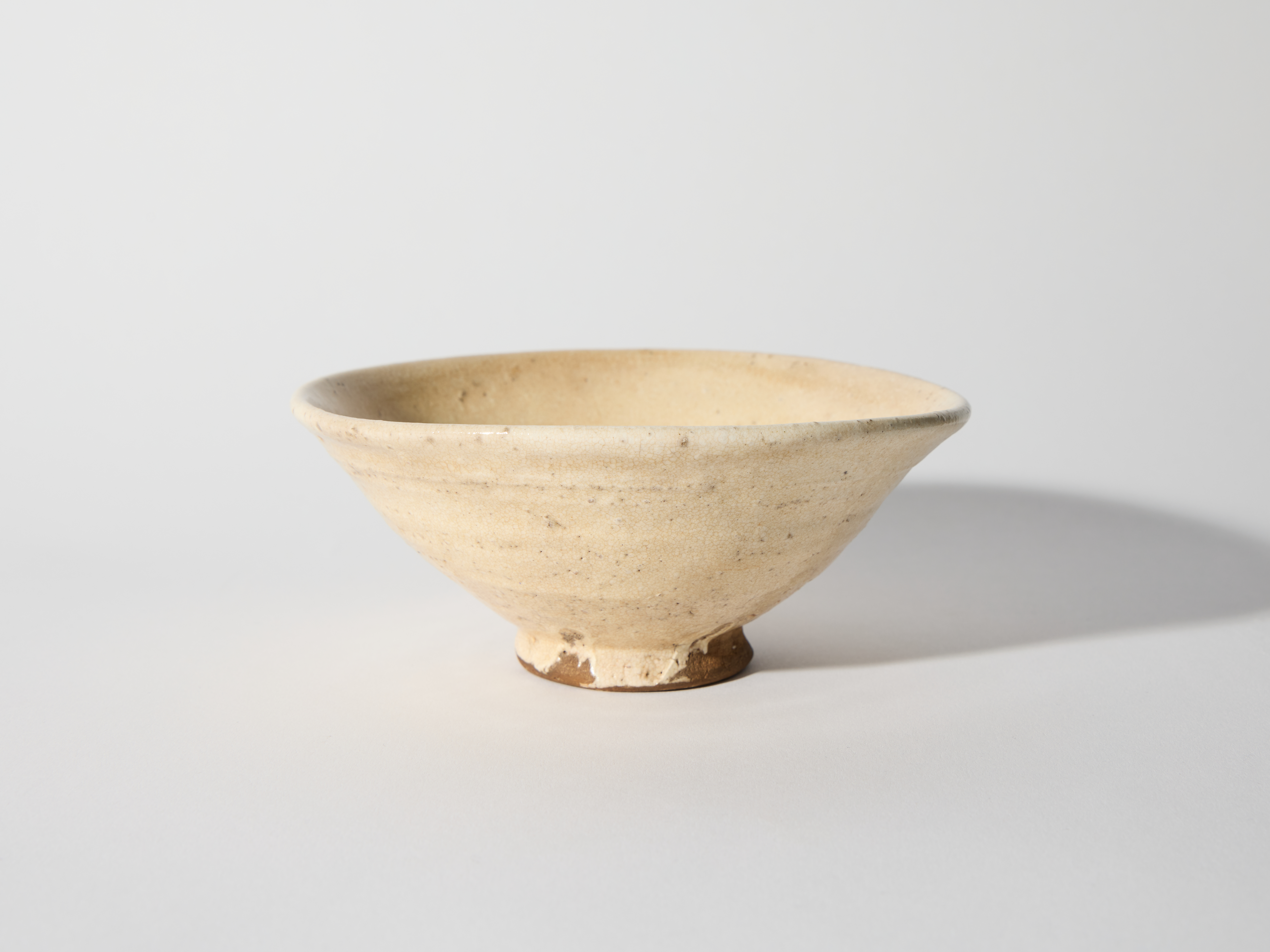
- Title
- Ido Chawan: Variable Condition Front View
- Type
- Digital image
- Subject
- Ido chawan
- Variable condition
- Front view
- Directional lighting
- Single-sided lighting
- Shadow formation
- Form perception
- Surface texture
- Black reflector
- 2D digitisation
- Creator
- Wook Kim
- Date
- 2026
- Technical Requirement
- Image role: variable condition image.
- View type: front view.
- Lighting type: single directional light.
- Light distance: approximately 50 cm from the object.
- Incident method: changed from bilateral symmetrical direct light to single left-side directional light.
- Auxiliary device: black reflector positioned at the upper right.
- Camera setting: ISO 400 / f/22 / 1/125s / 50mm.
- File generation: RAW-derived cropped JPEG image.
- Colour profile: sRGB.
- Depicted Object
-
 Ceramic Objects
- Comparison Image
- Ido Chawan: Control Condition Front View
- Rights
- Image and record by Wook Kim.
- Reproduction Note
- Photographic intention: This image was produced to make the irregular form and three-dimensional structure of the Ido Chawan more clearly visible. Shadow was treated not as an error to be removed, but as a visual cue that supports the perception of depth, curvature, and asymmetry.
- Problem recognition: In the control condition image, the symmetrical lighting minimised shadows and weakened tonal contrast. The irregular rim, the depth of the inner and outer curves, the subtle curvature of the vessel wall, and the rough surface texture were therefore represented too evenly and appeared relatively flat.
- Adjustment process: The bilateral softbox arrangement was replaced with a left-side single directional light. The light distance was reduced to approximately 50 cm so that more concentrated light reached the object. A black reflector was positioned at the upper right to suppress unwanted reflection and strengthen tonal contrast. ISO was increased to 400 to compensate for the altered exposure condition.
- Visual observation: In the variable condition image, stronger tonal differences are formed along the inner and outer curves. The irregular rim and asymmetrical profile appear more three-dimensional, while the rough surface and fine grain are more clearly perceived through directional light and shadow. The form is read as a structure with depth and orientation rather than as a flat outline.
- Interpretive significance: The comparison demonstrates that shadow can function as necessary visual information when form is the primary object of interpretation. The apparent increase in depth and surface definition results from photographic conditions and decisions rather than from any change in the ceramic object itself.
Part of Ido Chawan Object