Ido Chawan: Surface Detail
This detail view enlarges the corresponding surface area in the control and variable condition images. It examines how the change in lighting conditions affects the visibility of the fine crack-like surface network, granular texture, and small dark inclusions across the vessel wall.
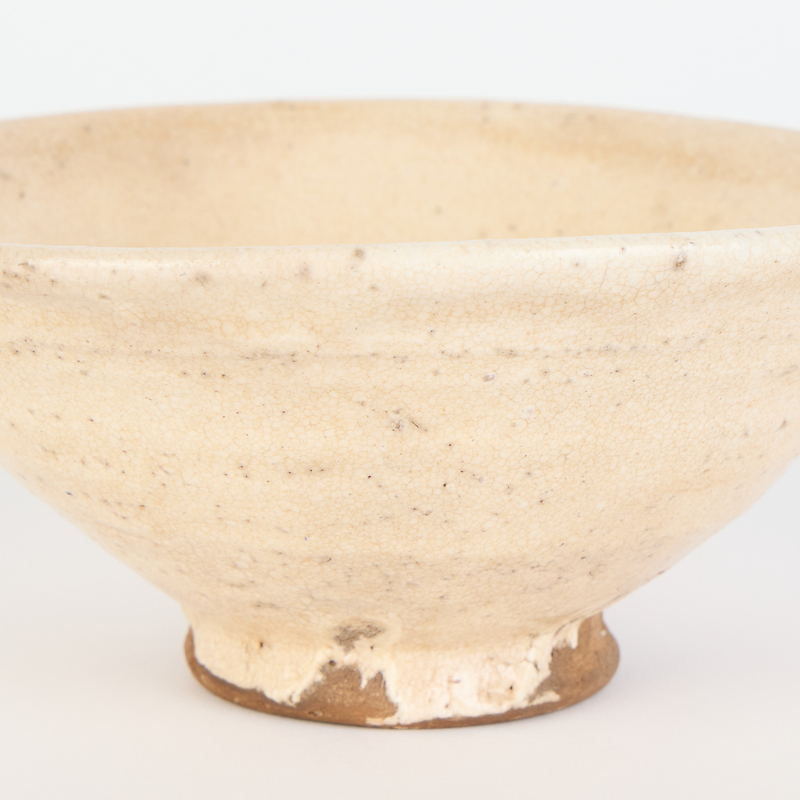
Ido Chawan: Control Condition Surface Detail View
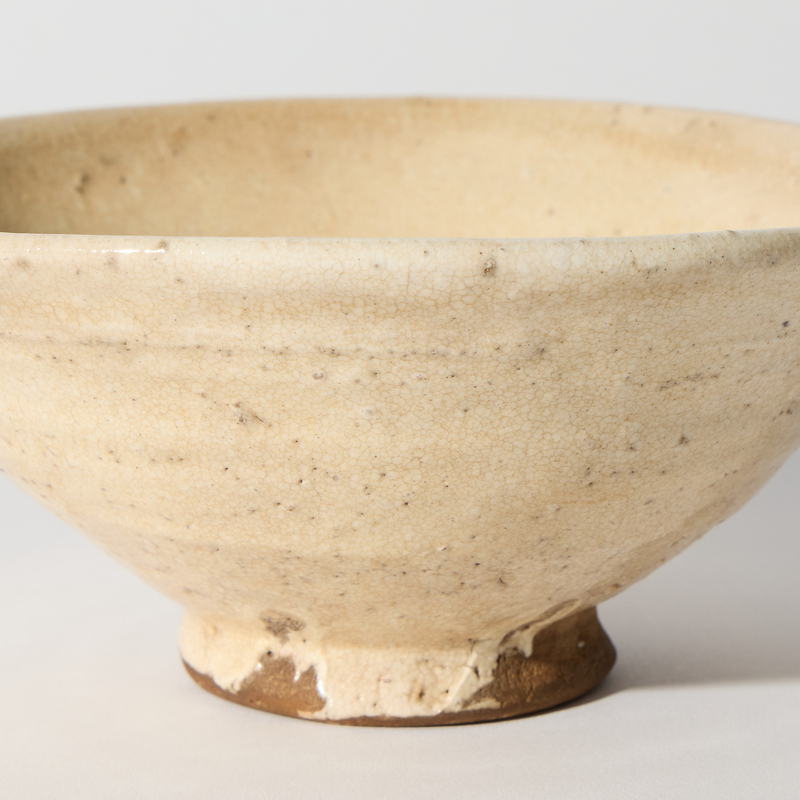
Ido Chawan: Variable Condition Surface Detail View
Detailed Observation
In the control condition image, the bright and evenly distributed illumination reduces local contrast across the vessel wall. The fine crack-like network remains present, but its boundaries appear faint and visually compressed. Small dark inclusions and variations in the granular surface are also difficult to distinguish consistently.
In the variable condition image, directional light produces stronger tonal variation across the curved wall. The fine surface network becomes more clearly differentiated, while granular irregularities and small dark inclusions are easier to identify. The surface is consequently perceived as materially varied rather than uniformly pale and flat.
These surface features were not created by the variable condition. Their increased visibility results from the altered photographic arrangement and the way directional light interacts with the existing surface.