Celadon Case Study
This case compares two front-view images of the same Celadon object.
The comparison examines how lighting conditions affect the visibility of glaze reflection, colour depth, surface detail, and ceramic materiality.
Control Condition
Direct lighting was used as the baseline condition. This image provides a clear front-view record, but strong glaze reflection can flatten colour depth and reduce surface detail.
Variable Condition
The lighting condition was adjusted using reflector-assisted indirect light. This condition reduces direct reflection and makes glaze colour and surface information more stable.
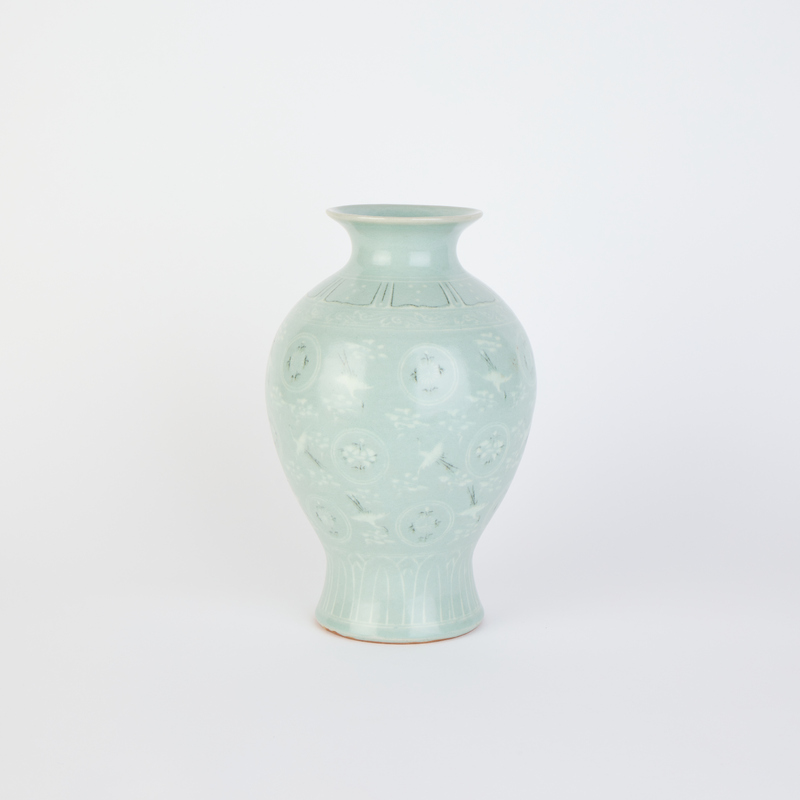
Celadon: Control Condition Front View
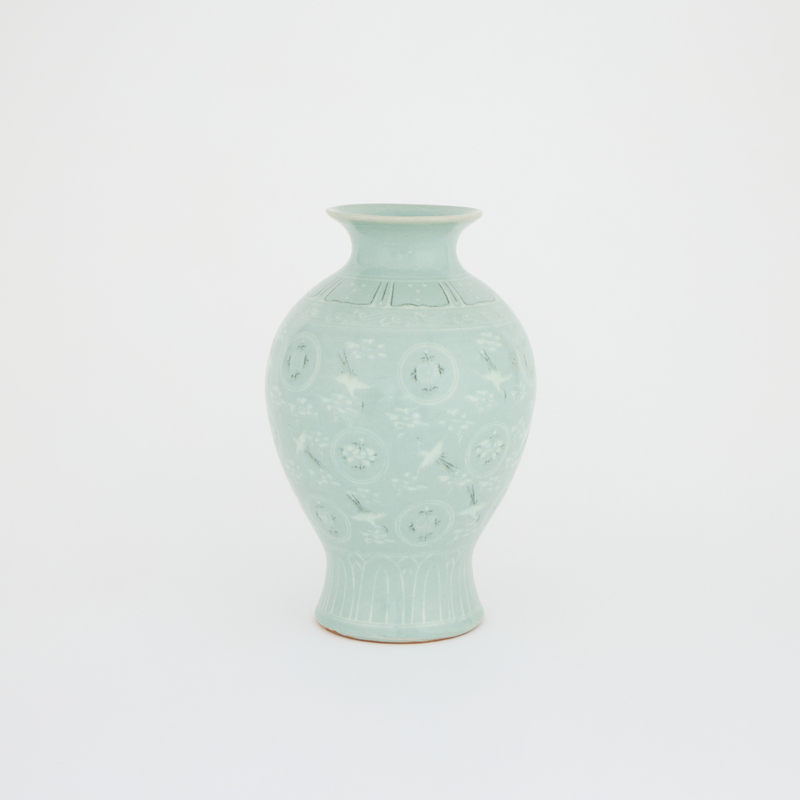
Celadon: Variable Condition Front View
1. Quantitative Paradata: Technical Requirement
This table compares the technical and physical conditions under which the two images were produced.
| Category | Control Condition | Variable Condition |
|---|---|---|
| Image role | Control condition image | Variable condition image |
| View type | Front view | Front view |
| Lighting type | Bilateral softbox lighting | Reflector-assisted indirect lighting |
| Light distance | Approximately 1 m from the object | Not recorded |
| Incident method | Direct light from left and right softboxes | Indirect light reflected toward the object |
| Auxiliary device | Not used | Reflector |
| Camera setting | Not recorded | ISO 250 / f/11 / 1/125s / 50mm |
| File generation | RAW-derived cropped JPEG image | RAW-derived cropped JPEG image |
| Colour profile | sRGB | sRGB |
2. Qualitative Paradata: Reproduction Note
This table compares the interpretive and observational notes recorded for each image.
| Category | Control Condition | Variable Condition |
|---|---|---|
| Photographic intention | This image was produced as a control condition image in order to provide a baseline for comparison with the variable condition image. | This image was produced to reduce strong specular reflection and to record the celadon glaze colour, decorative details, and surface information more consistently. |
| Problem recognition | Direct softbox lighting produced bright highlights on the central body and curved areas. These reflections weakened decorative and surface details and made the green-blue glaze colour appear brighter and flatter. | The control condition showed that direct illumination caused reflected light to become visually dominant over information contained in the glossy glazed surface. |
| Adjustment process | No corrective adjustment was applied. The bilateral direct softbox arrangement was retained as the control condition. | The direct softbox arrangement was removed, and reflected light was redirected toward the object using a reflector. |
| Visual observation | Bright highlights are visible on the central body and curved surface. Some decorative details appear less distinct, while the glaze colour appears relatively pale and flat. | Strong highlights are reduced, decorative and surface details appear more consistently visible, and the green-blue glaze colour is perceived with greater depth. |
| Interpretive significance | The image demonstrates that even illumination and a clearly visible form do not necessarily provide a sufficient record of material qualities. | The comparison demonstrates that reflection control changes the type of visual information made available in the digital record. |
Explore Object Detail
The annotated image identifies an area where lighting conditions affect the visibility and legibility of the decorative motifs on the celadon surface.
Select the numbered detail below to open its comparison page.

Interpretation
The comparison demonstrates that the difference between the two images is not merely a matter of brightness or aesthetic preference. In the control condition image, direct softbox lighting produces strong specular reflection on the glossy glaze, weakening decorative details, surface information, and colour depth. In the variable condition image, reflector-assisted indirect lighting reduces direct reflection and allows the green-blue glaze colour and surface details to be perceived more consistently.
The visible difference does not result from a change in the ceramic object itself, but from a change in the conditions of image production. Recording these conditions and photographic decisions as paradata allows viewers to distinguish the material properties of the Celadon object from visual effects produced by lighting.
Full Media Records
The full media records provide the complete metadata and paradata for each image.